Resources and Development – Class 10 Geography
Resources serve as the backbone of human existence and the progress of the economy. They help fulfill our basic needs, improve living standards, and drive national growth. Understanding resources, their types, planning, and conservation is crucial for sustainable development.
1. What is a Resource?
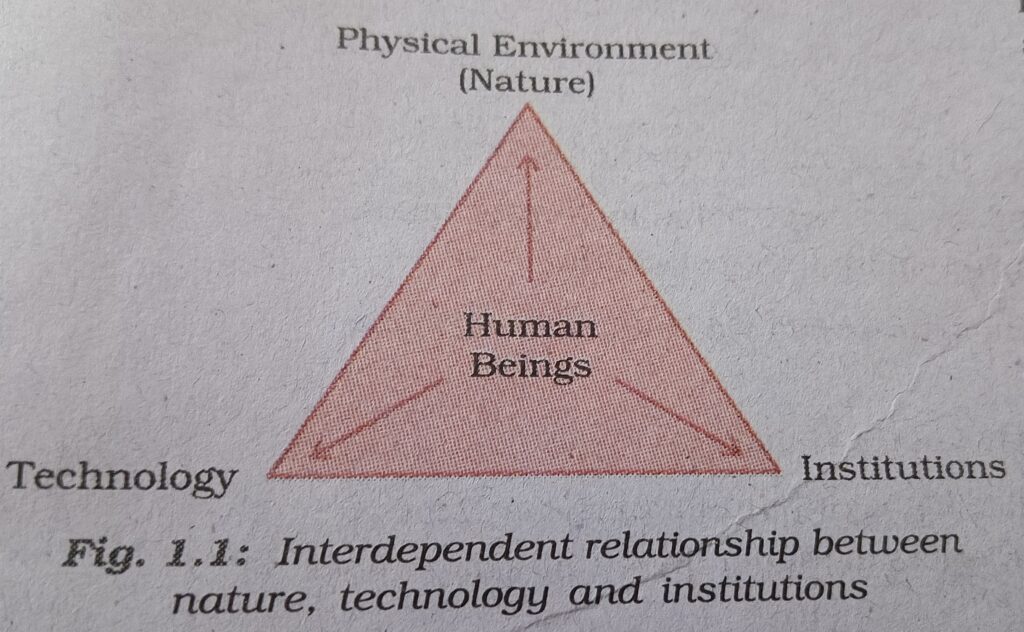
A resource is anything available in the environment that can be used to satisfy human needs, provided it is technologically accessible, economically feasible, and culturally acceptable.
Features of Resources
- Utility: Must have some use or value.
- Accessibility: Should be technologically and economically usable.
- Dynamic: Resources change over time with technology and needs.
2. Types of Resources
Resources can be classified in several ways:
(A) On the Basis of Origin
- Biotic Resources: Derived from living beings (e.g., forests, wildlife, fisheries).
- Abiotic Resources: Non-living things (e.g., minerals, metals, water).
(B) On the Basis of Exhaustibility
- Renewable Resources: Can be replenished naturally (e.g., solar energy, forests, wind).
- Non-renewable Resources: Exist in fixed quantities; take millions of years to form (e.g., coal, petroleum, natural gas).
(C) On the Basis of Ownership
- Individual Resources: Privately owned by individuals (e.g., farmland, houses).
- Community Resources: Shared and available for use by all people of a locality (e.g., public gardens, common grazing fields).
- National Resources: Owned by the government within a nation (e.g., roads, railways).
- International Resources: Managed by international institutions; no single nation owns them (e.g., high seas, space).
(D) On the Basis of Development
- Potential Resources: Resources present in a particular area but not fully developed or utilized (e.g., solar energy potential in Rajasthan).
- Developed Resources: Resources that are surveyed and used (e.g., coal mines).
- Stock: Resources available but not used due to lack of technology (e.g., hydrogen as a fuel).
- Reserves: A portion of stock that is currently usable with available techniques (e.g., water stored in reservoirs).
3. Resource Planning in India
India is rich in resources but faces unequal distribution. To ensure sustainable development, proper resource planning is necessary.
Steps in Resource Planning
- Identification and Inventory: Survey of resources, mapping, and measurement.
- Planning Structure: Developing technology, institutional frameworks, and skill development.
- Matching Resource Development with Needs: Balanced regional development and environmental protection.
4. Land Resources
Land is a vital natural asset required for farming, forestry, extraction of minerals, construction of settlements, and industrial purposes.
Land Use Pattern in India
- Forest cover: 22%
- Net sown area: 54%
- Waste land: 5%
- Pastures and grazing land: 4%
Land Degradation
Continuous and unplanned exploitation of land without proper care causes land degradation.
- Causes: Overgrazing, deforestation, mining, industrial waste.
- Solutions: Afforestation, controlled grazing, proper waste disposal, soil conservation methods.
5. Soil as a Resource
Soil is the thin layer covering the earth’s surface that supports plant life.
Types of Soil in India
- Alluvial Soil: Found in northern plains; fertile; suitable for wheat, rice.
- Black Soil: Found in Deccan; retains moisture; ideal for cotton.
- Red and Yellow Soil: Located in certain regions like Odisha and Chhattisgarh; comparatively low in fertility.
- Laterite Soil: Found in areas such as Karnataka and Kerala; enriched with iron and aluminum content.
- Arid Soil: Found in Rajasthan; sandy and saline.
- Forest Soil: Found in hilly areas; supports forest vegetation.
6. Soil Erosion and Conservation
Soil Erosion
The removal of topsoil due to natural forces like wind and water.
- Types:
- Sheet erosion: Uniform removal of soil.
- Gully erosion: Formation of deep gullies (e.g., Chambal ravines).
Soil Conservation Methods
- Contour ploughing
- Terrace farming
- Strip cropping
- Afforestation
- Controlled grazing
7. Sustainable Development
Sustainable development means using resources in a way that meets current needs without compromising future generations.
Principles of Sustainable Resource Use
- Reduce, Reuse, Recycle
- Maintaining biodiversity
- Conserving renewable resources
- Eco-friendly technologies
8. Key Case Studies
- Indira Gandhi Canal: Helps irrigate the arid regions of Rajasthan, making desert land productive for farming.
- Chipko Movement: People protected trees from deforestation in Uttarakhand.
✅ Summary
- Resources are vital for economic and social growth.
- They are classified based on origin, exhaustibility, ownership, and development.
- Resource planning ensures sustainable use and balanced development.
- Proper preservation of land and soil is essential to avoid damage and loss caused by degradation and erosion.
- Sustainable development is necessary for long-term human survival.